
Breast Reduction in Oklahoma City, OK
Bajaj Plastic Surgery
Breast reduction is a surgery designed to decrease the size of the breasts. The procedure can alleviate physical and mental discomfort that may be the result of overly large breasts. Dr. Anu Bajaj is well-known for her cosmetic and reconstructive breast surgery skills.
When you choose breast reduction, you want a surgeon who not only understands the aesthetics but also the anatomy. Dr. Bajaj will consult with you to determine if breast reduction surgery can achieve the results you desire. Dr. Bajaj prides herself on truly listening to what you want and providing an honest recommendation.
Ready to learn more about how a breast reduction can help boost your self-confidence to the next level? Call our office at (405) 810-8448 today to schedule a personalized consultation with Dr. Bajaj and learn more about Oklahoma City breast reduction! Our services extend to the surrounding locations, including Edmond, Yukon, Mustang, and Norman.
Quick Links
What Is a Breast Reduction Surgery?
Breast reduction, also known as reduction mammaplasty, is a surgical procedure that reduces the size of the breasts by removing excess fat, tissue, and skin. In addition to reducing their size, the procedure reshapes the breasts so that they are more proportionate in shape and size to your body. A breast reduction can also lift the breasts if they are ptotic (sagging), and the areola can be reduced in size if it is excessively large. Breast reduction can be performed alone or combined with other procedures, such as a tummy tuck, liposuction, or facial surgeries.
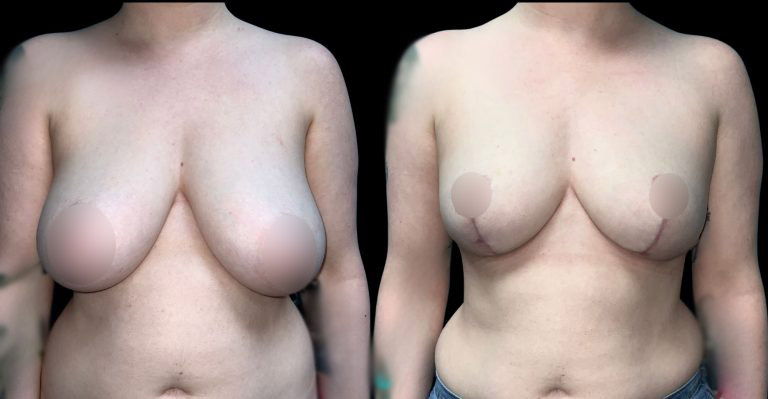
Benefits of Breast Reduction Surgery
- Alleviating physical pain or numbness associated with large breasts (skin rashes, back pain, neck pain, shoulder pain).
- Ability to run or work out without pain or discomfort.
- Providing breast size that’s in proportion with the rest of your body.
- Clothing may fit better.
- Treating self-image issues associated with large breast size.
Why Choose Dr. Bajaj for Your Breast Reduction?
Dr. Anueet Bajaj has founded her illustrious career on finding lasting solutions that fit her patient’s goals and lifestyles. Her honesty with her patients helps guide them toward making decisions without pressure. Her passion for aesthetic care stems from a deep desire to help patients make life-changing decisions that affect how they see and feel about themselves and how they present themselves to the world.
We are an office of women who understand the insecurities and importance surrounding the appearance of your breasts. When undergoing any procedure, we believe in preparing our patients for their surgery to help ensure safety, optimize their recovery, and lend to loved and lasting results. To help prepare patients, a nutritional plan will be created both before and after their surgery, a proactive pain and nausea management schedule will be carefully implemented, as well as our own personal testimonials from undergoing breast procedures.

Ideal Candidates for Breast Reduction
Many women who desire a breast reduction may experience body aches and pains due to macromastia, or large breasts. Women may find that they have neck pain, shoulder pain, shoulder grooving, back pain, headaches, numbness and tingling in their hands or fingers, and frequent rashes. Sleeping may be limited to certain positions, and even breathing can be difficult because the weight on your chest is so immense. Because of the excess weight of the breasts, it may be difficult to maintain good posture when standing or sitting. Exercise can also be difficult because the constant motion of the breasts may be painful, and it may be difficult to find bras that provide the appropriate level of support.
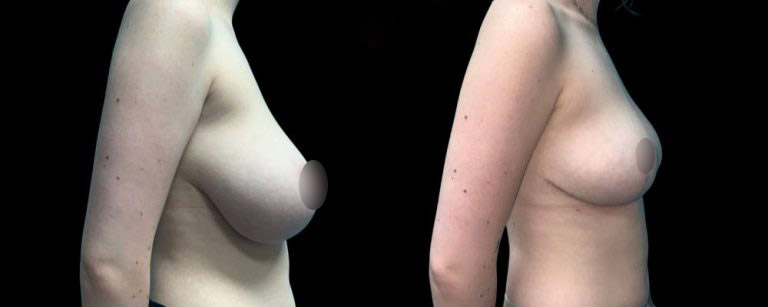
What’s a Good Age for Breast Reduction Surgery?
There is no age restriction for breast reduction surgery, but the breasts should be fully developed. You may be considering a reduction because of one or more of the issues mentioned above, or you may simply be interested in an aesthetic change. Regardless, at Bajaj Plastic Surgery, we are here to help you make your wishes a reality.
Incision Types
Dr. Anureet Bajaj offers 2 types of incisions for Breast Reduction procedures. During your examination at your consultation, she will discuss which type of incision will be best for you.
Vertical (Lollipop) Incision
Much like the shape of a lollipop, the vertical incision technique involves a circular pattern around the areola, along with an incision running from the base of the areola down to the breast crease, or inframammary fold. The appropriate amount of fat, tissue, and skin is removed, and the incision is then closed. Bust perkiness is achieved by suturing the breast glands to act as a support pillar, providing upward projection of the breast and areola.
Anchor Incision
Following the pattern of an anchor, this incision includes a circle around the areola, a straight line down to the inframammary fold, and an incision along the underside of the breast. Excess fat, skin, and tissue are removed, and sutures are used to close the incisions. Typically, Dr. Bajaj uses a medial pedicle to ensure an adequate blood supply to the nipple-areola complex and to create a round, natural-appearing breast shape.
Preparation
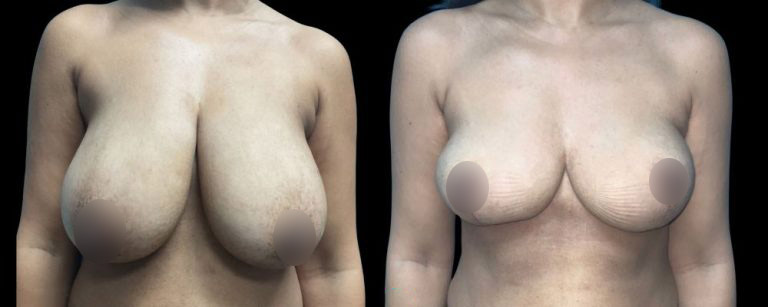
Prior to your breast reduction surgery, we may ask you to obtain a pre-operative mammogram if you are over the age of 40 or are due for your annual examination. You may also be asked to complete other medical tests and evaluations. Additionally, you may be instructed to avoid certain medications, such as aspirin or some anti-inflammatories, for 7–10 days before your surgery.
After surgery, arrange for a family member or friend to drive you home. It is important to know that the arm range of motion may be limited for some time following the procedure. Keep important items at counter height so you do not have to reach too high. Your home should be stocked with washcloths, ice, and gauze during your recovery period.
Procedure Information
Breast Reduction surgery is typically performed under a general anesthetic (meaning that you are asleep for the procedure) and as an outpatient (meaning that you will go home following your procedure). The surgical procedure will take approximately 2-3 hours to perform.
Ancillary Procedures
Although a Breast Reduction can be performed as a procedure on its own, an ancillary procedure can greatly enhance the results. To determine if you would benefit from an additional procedure, schedule a consultation with Dr. Bajaj at her Oklahoma City, location and she will gladly assess your needs.
Tummy Tuck Procedure
Sometimes referred to as a Mommy Makeover, any breast procedure can be performed in conjunction with a tummy tuck, or abdominoplasty. This option is popular among moms who have recently given birth and want to restore their pre-pregnancy bodies. A tummy tuck procedure tightens the abdominal wall while creating a slim, contoured waistline.
Liposuction Procedure
Liposuction is a procedure that removes fat deposits through means of suctioning. In rare cases, liposuction can be used as an aiding tool in a breast reduction procedure. Dr. Bajaj will determine if this method is appropriate for you. Alternatively, liposuction can be performed on other areas of the body during your breast reduction, such as the abdomen or thighs.
Before & Afters
View our gallery
How Long Does it Take to Recover from Breast Reduction Surgery?
Dr. Bajaj and our medical staff will continue to monitor you after your breast reduction surgery and will prescribe appropriate medications to keep you comfortable. You will be fitted with a post-surgical bra. A small drain may be placed to remove excess fluid from your breast, which will typically be removed within 1–2 days following surgery. Most bruising and swelling will resolve during the first 2–3 weeks; however, you will continue to notice a subtler decrease in swelling over the next 2–3 months. While you should avoid heavy lifting or strenuous activity for 2–3 weeks, you will be encouraged to walk around the house to prevent blood clots. Dr. Bajaj will see you in her office within the first 24–48 hours after surgery and then several times over the next 3 months to ensure proper healing. Most patients return to work and resume normal activities within 1–2 weeks of breast reduction surgery.
Consultation
During your consultation with Dr. Bajaj at her Oklahoma office, you will discuss whether breast reduction surgery can achieve the results you desire. You can address any problems you may be experiencing due to the large size of your breasts. A thorough examination will then be performed, and a combination of Dr. Bajaj’s findings and your aesthetic goals will allow her to develop an individualized procedure plan.
If you are considering breast reduction surgery—whether due to health concerns related to large breasts or simply to achieve smaller, more comfortable breasts—Dr. Bajaj and her staff are eager to speak with you about the benefits of the procedure. Please email Bajaj Plastic Surgery or call us today at (405) 810-8448 to schedule your consultation.
Breast Reduction in Oklahoma FAQs
Is breast reduction painful, and how is pain managed afterward?
Most patients experience some soreness, tightness, and swelling in the days following surgery. Pain is generally well controlled with prescribed medication, and discomfort typically improves significantly within the first week or two.
Will breast reduction leave visible scars?
Because breast reduction involves incisions, some permanent scarring is expected. Scars typically fade and flatten considerably over several months to a year, and their placement is chosen to be as discreet as possible, often hidden by clothing and swimwear.
Will I be able to breastfeed after a breast reduction?
Many women are able to breastfeed after breast reduction, especially with techniques like the medial pedicle approach that help preserve breast tissue and milk ducts. However, breastfeeding ability can vary, so it’s important to discuss your family planning goals with Dr. Bajaj during your consultation.
Does insurance cover breast reduction surgery?
Breast reduction may be partially or fully covered by insurance when it is performed to relieve documented physical symptoms, such as chronic back, neck, or shoulder pain. Coverage requirements vary by insurance provider, and our office can help you understand the documentation typically needed.
Will my nipple sensation change after breast reduction?
Temporary changes in nipple or breast sensation are common after surgery, ranging from increased sensitivity to numbness. For most patients, sensation gradually returns to normal over the following months as swelling subsides and nerves heal.
How long will I need to wear a surgical or compression bra after surgery?
Patients are typically fitted with a special post-operative bra that supports healing and controls swelling. Most patients wear this type of bra continuously for several weeks before transitioning to a regular supportive bra.
Can breast reduction be combined with a breast lift?
Yes. Breast reduction often naturally incorporates lifting techniques, since removing excess tissue and skin also elevates and reshapes the breast. Dr. Bajaj can tailor your procedure to address both size reduction and lift in a single surgery.
Will I need drains after breast reduction surgery, and how long?
Some patients have a temporary small drain placed to remove excess fluid after surgery. When used, drains are typically removed within 1 to 2 days during a follow-up visit.
When can I resume exercise after breast reduction?
Light walking is encouraged shortly after surgery to support circulation, and most patients can resume light activity within 1 to 2 weeks. More strenuous exercise, including upper-body workouts and heavy lifting, is typically delayed for several weeks until your surgeon confirms you’re ready.
Will my breasts continue to sag or grow after reduction?
While breast reduction removes excess tissue for a longer-lasting improvement, natural aging, gravity, weight changes, and hormonal shifts can still affect your breasts over time. Maintaining a stable weight can help preserve your results.
Can breast reduction affect future mammograms or breast cancer screening?
Breast reduction surgery does not prevent you from having mammograms, though it’s important to inform your radiologist about your surgical history. Some patients may also need a baseline mammogram before surgery, particularly those over 40.
What cup size can I expect after breast reduction?
Your resulting breast size depends on your body frame, goals, and the amount of tissue removed, which you’ll discuss in detail with Dr. Bajaj during your consultation. The goal is a size that’s proportionate to your body and relieves your symptoms.
Is breast reduction safe for teenagers?
Breast reduction can be appropriate for younger patients whose breasts are fully developed and who are experiencing significant physical discomfort. Dr. Bajaj will evaluate each patient individually, often in consultation with a parent or guardian, to determine appropriate timing.
Will weight gain or loss affect my breast reduction results?
Significant weight fluctuations after surgery can affect the size and shape of your breasts. Maintaining a stable, healthy weight after your procedure can help you preserve your results for the long term.
Can I get pregnant after a breast reduction, and how might pregnancy affect results?
It’s generally safe to become pregnant after breast reduction, though pregnancy and subsequent breastfeeding can change breast size and shape over time. If you’re planning future pregnancies, it’s helpful to discuss this with Dr. Bajaj so your surgical plan can take it into account.
What is the difference between breast reduction and a breast lift?
Breast reduction removes excess fat, tissue, and skin to decrease breast size and relieve associated discomfort, while a breast lift repositions and reshapes the breast without significantly changing its size. Many patients benefit from a combination of both when size reduction and lifting are needed.
How soon can I sleep on my stomach or side after surgery?
Most patients are advised to sleep on their back with their upper body slightly elevated for the first few weeks to protect the incisions and reduce swelling. Your surgeon will let you know when it’s safe to gradually return to your preferred sleep position.
Will there be swelling or bruising after breast reduction, and how long does it last?
Some swelling and bruising are normal after surgery and are usually most noticeable in the first 1 to 2 weeks. Most visible swelling resolves within a few weeks, though subtle changes can continue to refine over 2 to 3 months.
What should I avoid doing before my breast reduction surgery?
Patients are generally advised to avoid smoking, certain medications and supplements that increase bleeding risk, and significant weight fluctuations in the weeks leading up to surgery. Dr. Bajaj’s team will provide detailed pre-operative instructions during your consultation.
Are there non-surgical alternatives to breast reduction?
There is currently no non-surgical treatment that can meaningfully reduce breast size or weight. While supportive garments and physical therapy may help manage some symptoms temporarily, surgical breast reduction remains the most effective way to achieve lasting relief and reshaping.
Ready to Get Started?
Time to start shopping for a stylish new wardrobe to show off your new figure. Schedule your personalized consultation with Dr. Bajaj to learn more about what breast augmentation can do for you. Call (405) 810-8448 or complete our email contact form to reach our Oklahoma City office.